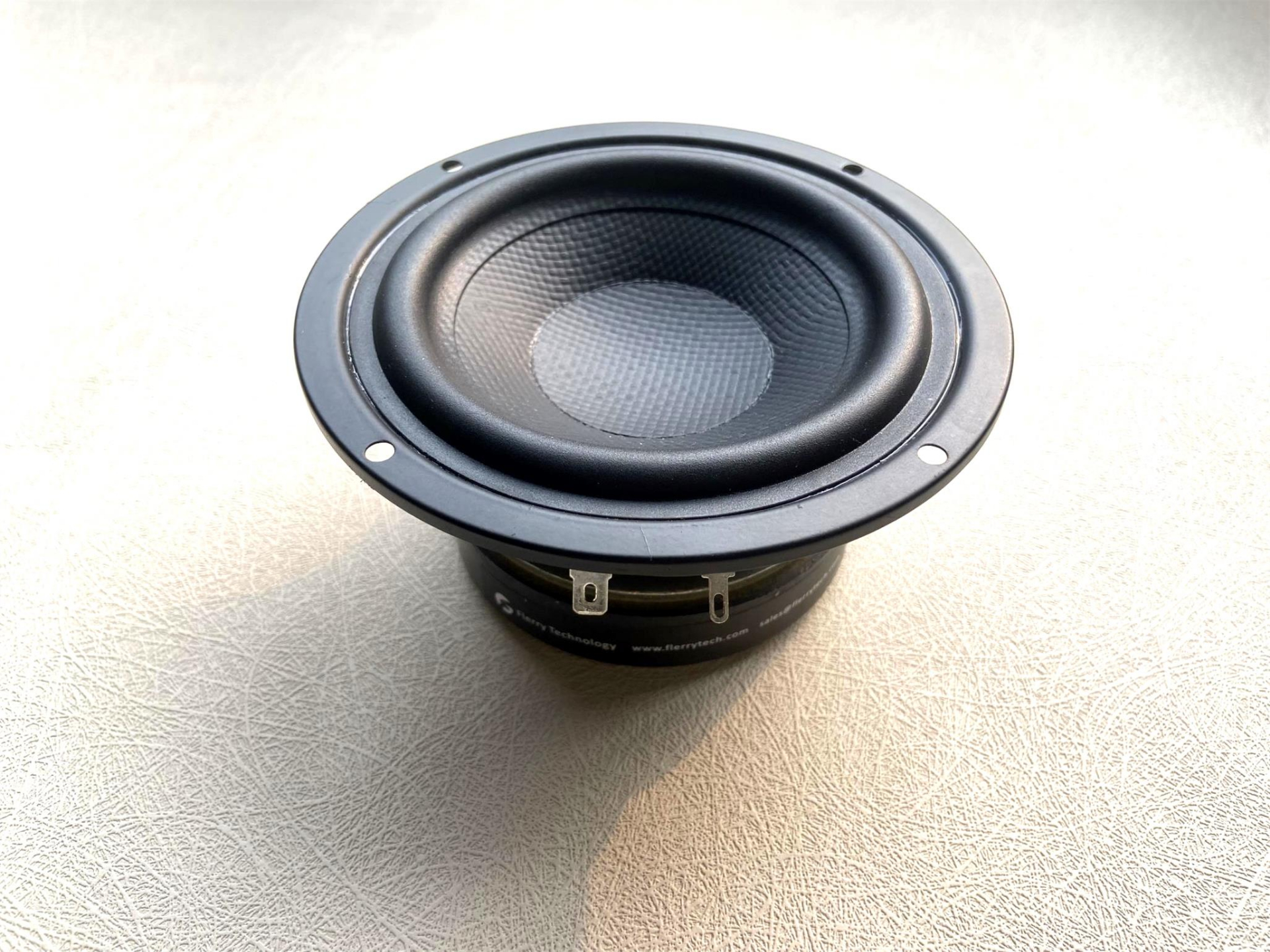


What is an exciter?
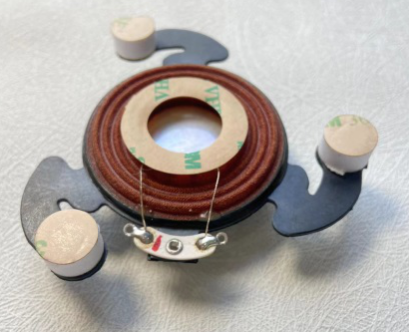
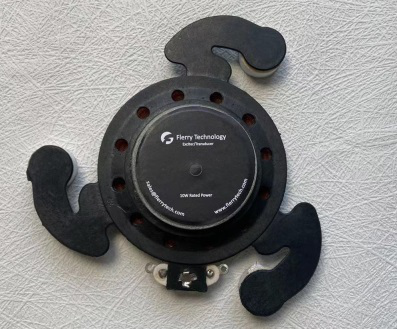
Exciter is a small and flat full-range speaker. Exciter uses neodymium magnet and tamper, without basket or cone. Light weight, small size enables exciter to most of the audio applications. Differs from traditional loud speaker, exciter needs to resonate with a flat surface capable of vibrating.
Exciter Structure
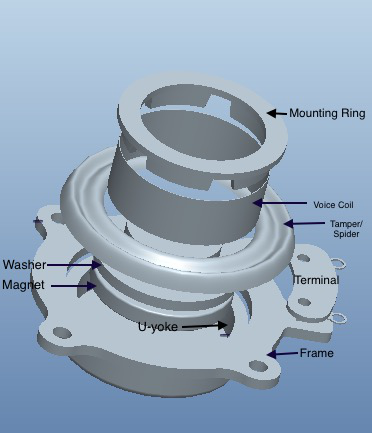
How does exciter work?
Exciters are comprised of a motor assembly, a voice coil, a suspension system, electrical connection terminals, and amounting ring or amounting legs which connect the exciter to the mounting surface. When a signal is transmitted to the exciter, exciter begins to vibrate at the frequency of the signal and those vibrations transfer through the exciter’s mounted surface then produce sound.
About the frequency and sensitivity
An exciter's frequency response and sensitivity are completely dependent on the exciter's mounted surface. Ideally, exciter should be mounted onto thin, lightweight materials.
Thinner, smaller materials will tend to be louder and create a mid or high frequency response. Thicker, larger materials (with multiple exciters) will be slightly quieter but result in a more full-range sound. Acoustic sound panel is the best choice, and followed by foam board, MDF (thinner than 6mm),plastic board, hardboard, cardboard and ceiling panels…
How to install exciter?
1) Before installing the exciter, make a test run to determine the exciter position on surface for the best sound reproduction.
2) Remove the protective film of the 3M ring or EVA ring, and then attach exciter onto surface. For other exciters that has screw hole which is on the back center of exciter, use a screw to mount exciter onto plate, it is still recommended to apply an adhesive such as “super glue”, hot melt glue, or double-sided tape to the mating surface of the mounting plate in addition to the mechanical fasteners, to avoid rattling or buzzing of the mounting plate against the surface.
3) Switch off the amplifier prior to connecting the exciter. Connect the cable to a speaker output of the amplifier. When connecting multiple exciters to a single output, make sure that they have the same polarity and are not below the minimum load impedance of the output.
4) For installations of multiple exciters, the connecting wire should not rest against the excited surface, in order to prevent noise from the wire buzzing against the surface. Where wire contacts the excited surface, it may be useful to add foam or felt to cushion the wire and prevent noise. It is not recommended to space the exciters evenly across the surface. This will result in very narrow sound dispersion at upper midrange and treble frequencies. Instead, place the exciters together in a group, with exciters at unequal