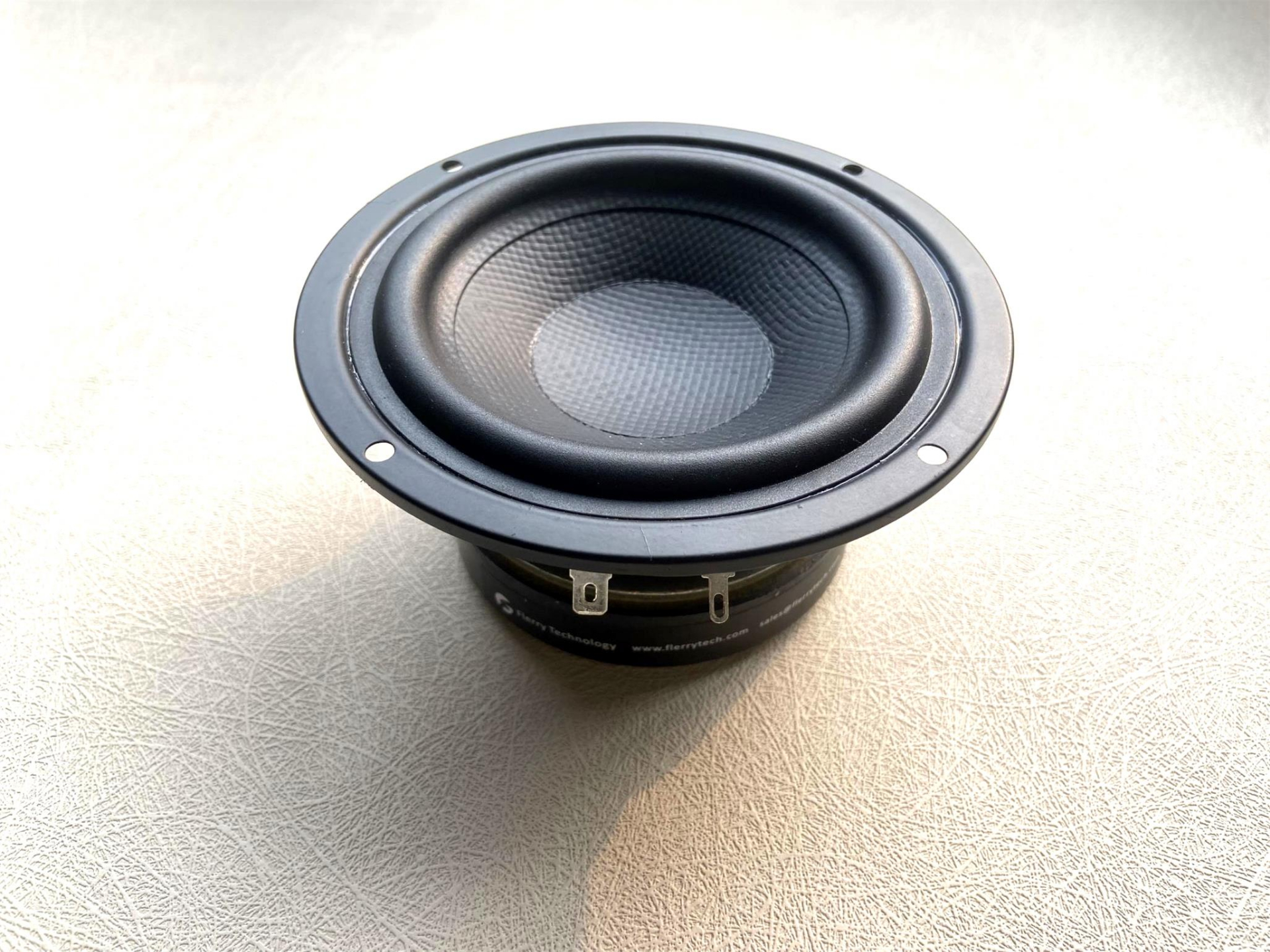


Loudspeakers, commonly known as speaker drivers, are a very commonly used electroacoustic transducer and are the main components in electronic products such as audio systems, televisions, radios, players, and repeaters. The common physical appearance and circuit symbols of speakers are shown in the following figure, commonly represented by the letters "B" or "BL" in the circuit.
1. Classification of speakers
Loudspeakers can be divided into dynamic coil (electric), capacitive (electrostatic), piezoelectric (crystal or ceramic), electromagnetic (spring loaded), ionized, and pneumatic types based on their energy conversion mechanism and structure. Among them, electric speakers have the advantages of good electroacoustic performance, firm structure, and low cost, and are widely used; According to the sound radiation material, it can be divided into paper basin type, horn type, and diaphragm type speakers; According to the shape of the paper basin, it can be divided into circular, elliptical, double paper basins, and rubber folding ring speakers; According to the working frequency, it can be divided into bass, mid-range, and tweeter speakers, low impedance and high impedance speakers based on voice coil impedance; According to the effect, it can be divided into direct speakers and ambient speakers.
2. Composition of speakers
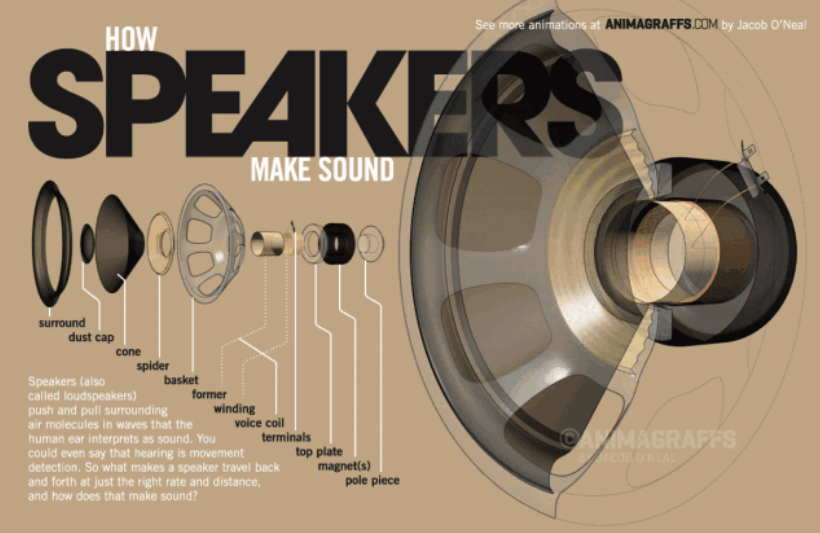
The speaker is composed of a diaphragm/cone, magnet (Ferrite or NdFeb), voice coil, basket, a dust cap, spider etc., as shown in the following figure.

3. Working principle of electric speakers
When an audio current passes through a voice coil (coil) in a magnetic field, a magnetic field that changes with the audio current is generated. This magnetic field interacts with the magnetic field of a permanent magnet, causing the voice coil to vibrate along the axial direction, driving the paper basin to vibrate the surrounding large area of air, thereby converting mechanical energy into sound energy and producing a pleasant sound.
4. Main performance indicators of speakers
(1) Rated Power
The rated power is also known as rated power or undistorted power. It refers to the maximum allowable input power of the speaker within the rated undistorted range, and the power value marked on the speaker's trademark and technical manual is the rated power value.
(2) Maximum power
The maximum power refers to the peak power that a speaker can withstand at a certain moment. To ensure the reliability of speaker operation, the maximum power of the speaker is required to be 2-3 times the Rated Power.
(3) Rated impedance
The impedance of a speaker is generally related to frequency. Rated impedance refers to the impedance value measured from the speaker input when the audio frequency is 400Hz. It is generally 1.2 to 1.5 times the DC resistance of the voice coil. There are various types of impedance for general dynamic speakers, including 4ohm, 8ohm, 16ohm, 32ohm, etc.
(4) Frequency response
When an audio signal with the same voltage but different frequencies is input into the voice coil of the speaker, a varying sound pressure will be generated. In general, medium audio signals generate higher sound pressure, while low and high audio signals generate lower sound pressure. The high and low frequency range when the sound pressure drops to a certain value of the mid range audio signal is the frequency response characteristics of the speaker, which is the frequency response range. The frequency characteristic of an ideal speaker should be 20-20kHz, which allows for uniform playback of all audio signals. However, it is not possible for a single speaker to achieve this function. Each speaker can only replay a certain part of the audio signal well.
(5) Distortion
There are two types of distortion in loudspeakers: frequency distortion and nonlinear distortion. Among them, frequency distortion is caused by stronger playback of signals at certain frequencies and weaker playback of signals at other frequencies. Distortion disrupts the proportion of high and low pitched loudness and alters the original sound quality. The nonlinear distortion is due to the inconsistency between the vibration of the speaker vibration system and the fluctuation of the signal, which adds a new frequency component to the output sound wave.
(6) Directionality
Directionality is used to characterize the sound pressure distribution characteristics of speakers in various directions of space radiation. The higher the frequency, the worse the directionality, while the larger the paper basin, the stronger the directionality. Detailed internal structure diagram of the horn
The core component responsible for producing sound in audio devices is the speaker, commonly known as the speaker. Whether it is the audio system or headphones, this key component is indispensable. A speaker is an energy conversion device that converts electrical signals into acoustic signals.
The side view of the speaker below can help us understand the basic structure of the speaker. A horn is generally composed of key components such as a T-iron, magnet, voice coil, and diaphragm.
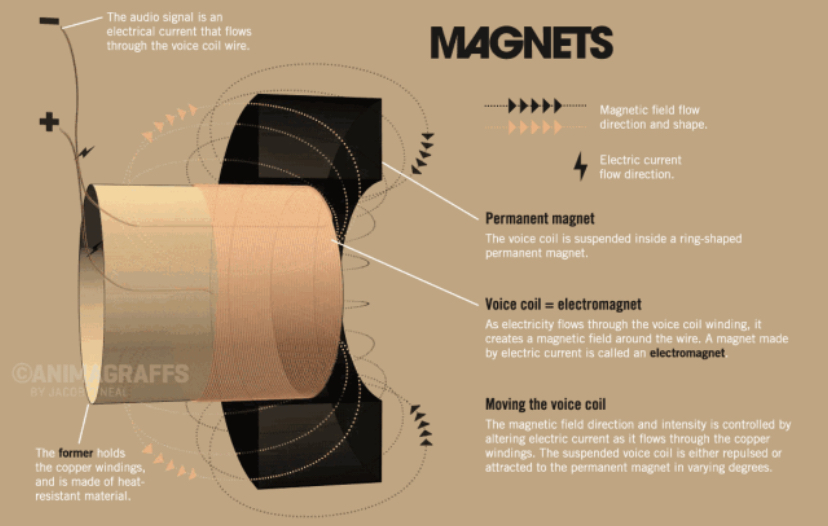
A magnetic field is generated in the electrified wire, and the strength of the current affects the strength of the magnetic field (the direction of the magnetic field follows the right-hand rule). When AC audio current passes through the coil of the speaker (i.e. the voice coil), a corresponding magnetic field is generated in the voice coil according to the above principle. This magnetic field interacts with the magnetic field generated by the built-in magnet on the speaker, causing the voice coil to vibrate with the strength of the audio current in the speaker's magnetic field. The diaphragm and sound coil of the speaker are connected together. When the sound coil vibrates with the diaphragm of the speaker, it drives the surrounding air to vibrate, and the speaker produces sound. As shown in the figure below, this is the principle of the horn.